Industrialisation de l'Afrique : le défi du financement au cœur de la feuille de route d'Abidjan
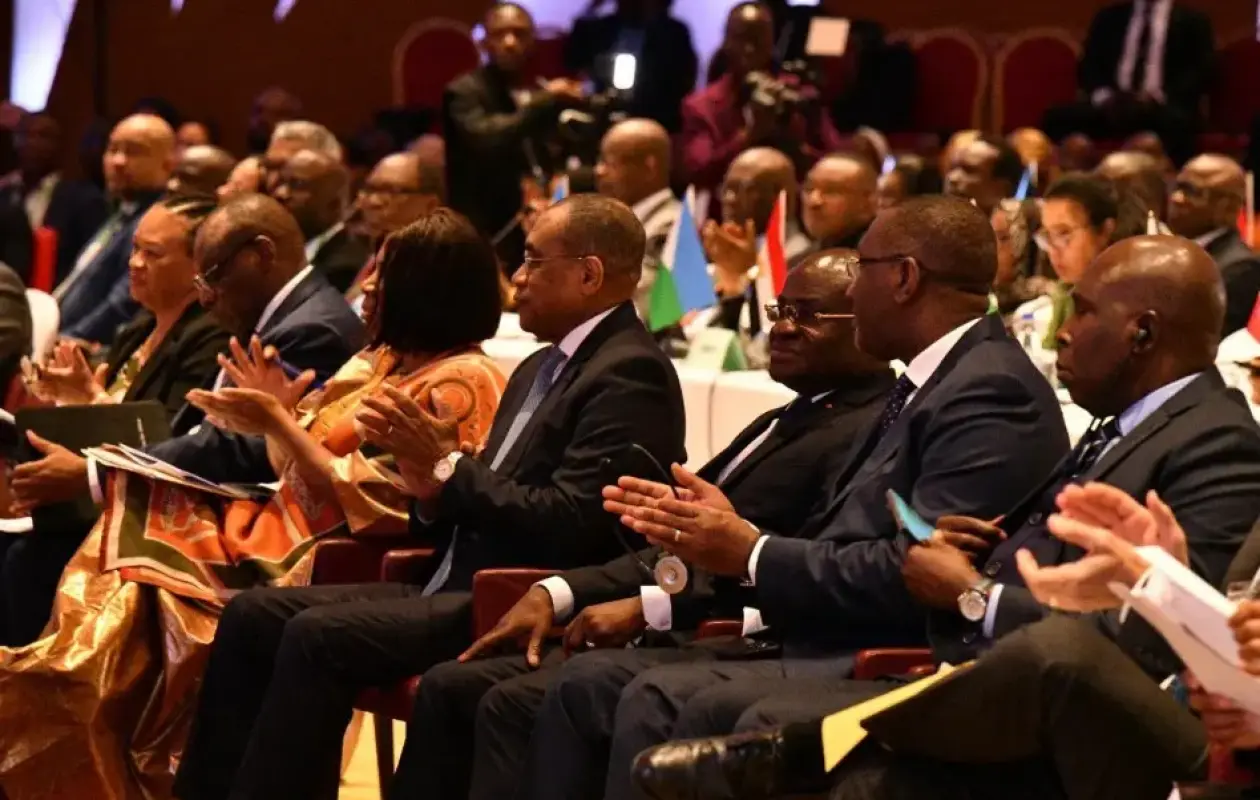
Gathered in Ivory Coast's economic capital, African ministers, financial decision-makers, and international partners advocated for a thorough overhaul of the continent's industrial financing mechanisms. Faced with geopolitical shocks, high debt burdens, and fragile supply chains, Africa is searching for the key to accelerating its economic transformation.
Organised over four days, the joint session of the 9th Specialised Technical Committee (STC) on Finance, Economy and Integration and the 5th STC on Trade, Industry and Mines of the African Union (AU) made an uncompromising diagnosis: Africa must reinvent its model.
Opening the proceedings on behalf of Prime Minister Robert Beugré Mambé, Adama Coulibaly, the Ivorian Minister of Economy, Finance and Budget, recalled the scale of the undertaking: the continent must mobilize nearly $400 billion per year by 2030 to finance its structural transformation.
To meet this challenge, four priority levers have been highlighted:
As an example of macroeconomic resilience, Adama Coulibaly highlighted Côte d'Ivoire's performance (projected growth of 6.6% in 2025 and 6.2% in 2026, deficit reduced to 3%). He noted that the country's 2026-2030 National Development Plan (NDP) will mobilize 114,838.5 billion CFA francs, with over 70% of the funding coming from the private sector.
Echoing this sentiment, the Minister of Trade and Industry, Kalil Konaté, stressed that artificial intelligence, the energy transition and digital technology require the creation of local added value to guarantee the continent's competitiveness.
For Francisca Tatchouop Belobe, the AU Commissioner for Economic Development, the current model is unsustainable. Africa continues to export its raw materials only to re-import processed products, ignoring the enormous potential of its own market of 1.5 billion consumers offered by the AfCFTA.
She pointed out that the annual infrastructure deficit exceeds $100 billion and that genuine industrialization requires:
This observation of a breakdown is shared by international donors. Claver Gatete (Executive Secretary of the ECA) and Marie-Laure Akin-Olugbade (Vice-President of the AfDB) reaffirmed that industry is the only engine capable of generating massive jobs and strengthening resilience in the face of crises.
One of the highlights of the meeting was the announcement by Marie-Antoinette Rose Quatre, Director of the MAEP: the official launch of the African Credit Rating Agency (AFRA) is scheduled for October 6, 2026, in Port Louis, Mauritius. This strategic tool aims to better assess continental risk and reduce borrowing costs for African states.
Finally, the voice of women entrepreneurs was brought forward by Mamadou Arzika Rabiatou, president of the Association of African Women for Transformation. She advocated for concrete actions: the creation of a research center dedicated to women, preferential access to financing, the acceleration of their digital transition, and the establishment of a continental mechanism to monitor state commitments to women's entrepreneurship.







Commentaires (0)
Participer à la Discussion
Règles de la communauté
💡 Astuce : Utilisez des emojis depuis votre téléphone ou le module emoji ci-dessous. Cliquez sur GIF pour ajouter un GIF animé. Collez un lien X/Twitter, TikTok ou Instagram pour l'afficher automatiquement.
Se connecter
Commentez avec votre profil, votre photo, et soyez averti des réponses.