RDC : les guérisseurs traditionnels en première ligne face à Ebola
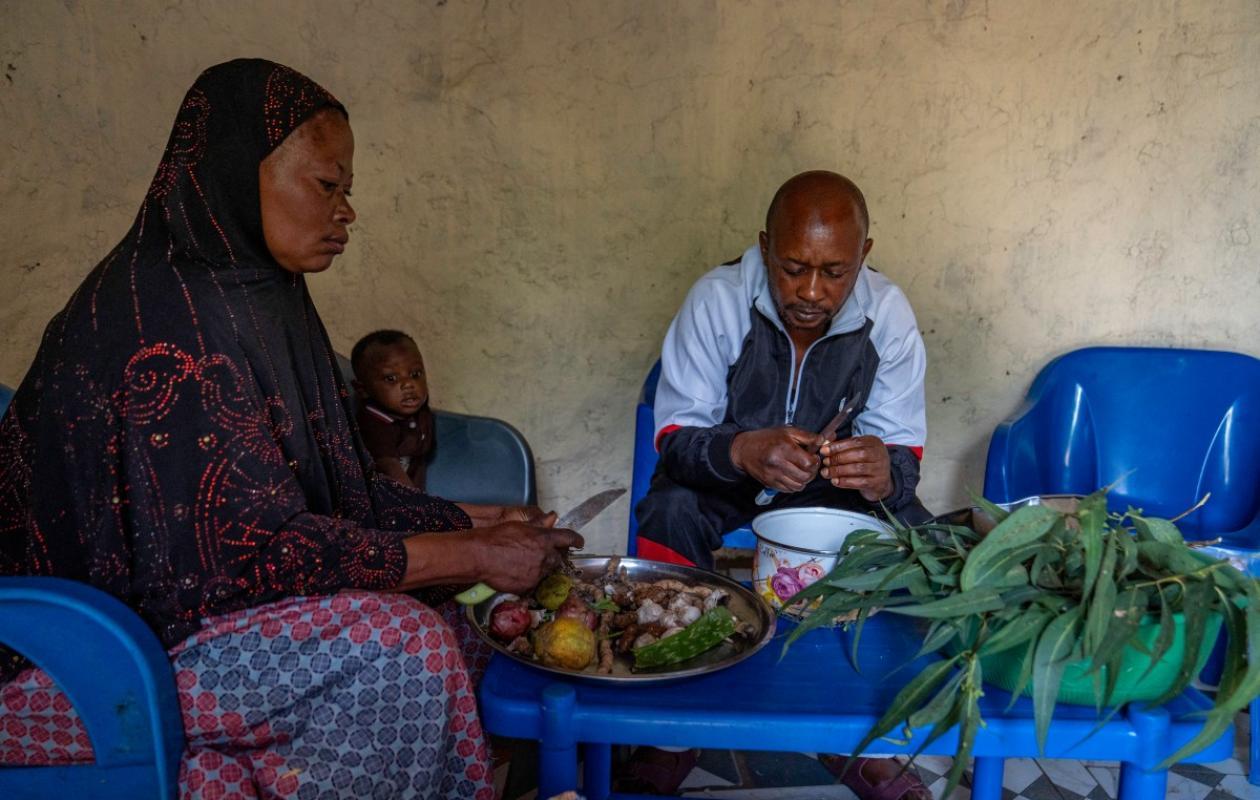
In her garden, Mariam Kabika, a healer, hopes to find the ingredients for a remedy against the Ebola disease that is progressing in eastern DRC, a poor region where the response is slow to organize and where traditional healers are on the front line.
"I am looking for eucalyptus leaves, avocado leaves, mango and papaya," lists Mariam Kabika, a healer in Bunia, the capital of Ituri province (northeast), the epicenter of the epidemic.
There is no licensed vaccine or treatment for the rare Bundibugyo strain that is causing the current Ebola epidemic.
But Mariam Kabika and her husband, Dauda Tshimanga, claim to have developed a "medicine" capable of curing this extremely deadly disease.
A little further on, Dauda Tshimanga's office is located in a thatched-roof hut, away from the family home.
Charms, perfume against evil spirits and decoctions of all kinds clutter the interior of this "laboratory of the ancestors", as Dauda Tshimanga calls it.
"If the patient does not recover with the plants we have prepared, we bring him into this laboratory to invoke the spirits and ask for the help of the ancestors," he says.
"Poisoning"
Listed in red letters on the wall are the various afflictions that this healer claims to be able to cure: "Sexual weakness, typhoid, hernia...". Ebola has now been added to this list.
Dauda Tshimanga claims to be able to cure this disease with an inhalation of boiled plants, morning, noon and evening for three days.
Since the start of the 17th Ebola epidemic in the Democratic Republic of Congo (DRC), no patient has risked trying this treatment.
But the man claims that "many people who arrived bleeding, with a fever" were cured during previous epidemics by traditional methods.
“Traditional medicine is not yet involved in the treatment and response to this disease, but we are ready to contribute,” says Dauda Tshimanga.
In a region with failing health infrastructure, many residents rely on "traditional healers," a profession not officially recognized in the DRC, but regulated and subject in principle to obtaining a license.
Often, illnesses are associated with "poisoning" caused by an enemy, neighbor, colleague, or relative.
Some Ebola patients "believe they are victims of poisoning and consult traditional healers who administer traditional remedies without dosage or control," laments Dr. Willy Beiza, a doctor in Bunia.
The use of healers delays the actual diagnosis and treatment of patients, who "are brought to our health facilities in a critical condition," he adds.
The epidemic currently spreading in the DRC began circulating several weeks before being identified and finally declared, a period during which the affected communities and some caregivers believed they were struck by a "mystical illness".
Traditional chiefs had been accused of casting a spell on young people from a community who had wanted to burn the coffin of an Ebola patient.
Essential
In the rural areas of Ituri, a region where armed groups repeatedly commit massacres, state services are largely absent from rural areas, and healthcare workers responding to Ebola sometimes encounter distrust from the population.
Despite the risks, traditional healers, who enjoy the trust of the inhabitants, remain essential players.
"An effective response relies on the integration of communities" and "their rituals," says the WHO.
During a previous Ebola outbreak in Bulape in 2025, customary authorities and certain ancestral practices helped to involve communities in the response, the organization says.
Traditional leaders have notably used an isolation ritual to quarantine suspected cases, and they have forbidden the washing of bodies and the collection of dead animals.
For now, the response to the current epidemic is slow to get organized in eastern DRC, where "only about 45% of contacts have been followed up", according to the WHO.
“We are asking traditional healers to refer patients to health centers,” and “we are distributing protective equipment to them,” says Marie Roseline Belizaire, WHO emergency director in Africa.
According to Dauda Tshimanga, "the Ebola epidemic is real and it is killing people. We must not ignore it."









Commentaires (0)
Participer à la Discussion
Règles de la communauté :
💡 Astuce : Utilisez des emojis depuis votre téléphone ou le module emoji ci-dessous. Cliquez sur GIF pour ajouter un GIF animé. Collez un lien X/Twitter, TikTok ou Instagram pour l'afficher automatiquement.