À Bringakro, le Nestlé Cocoa Plan place la famille au cœur d'un cacao durable
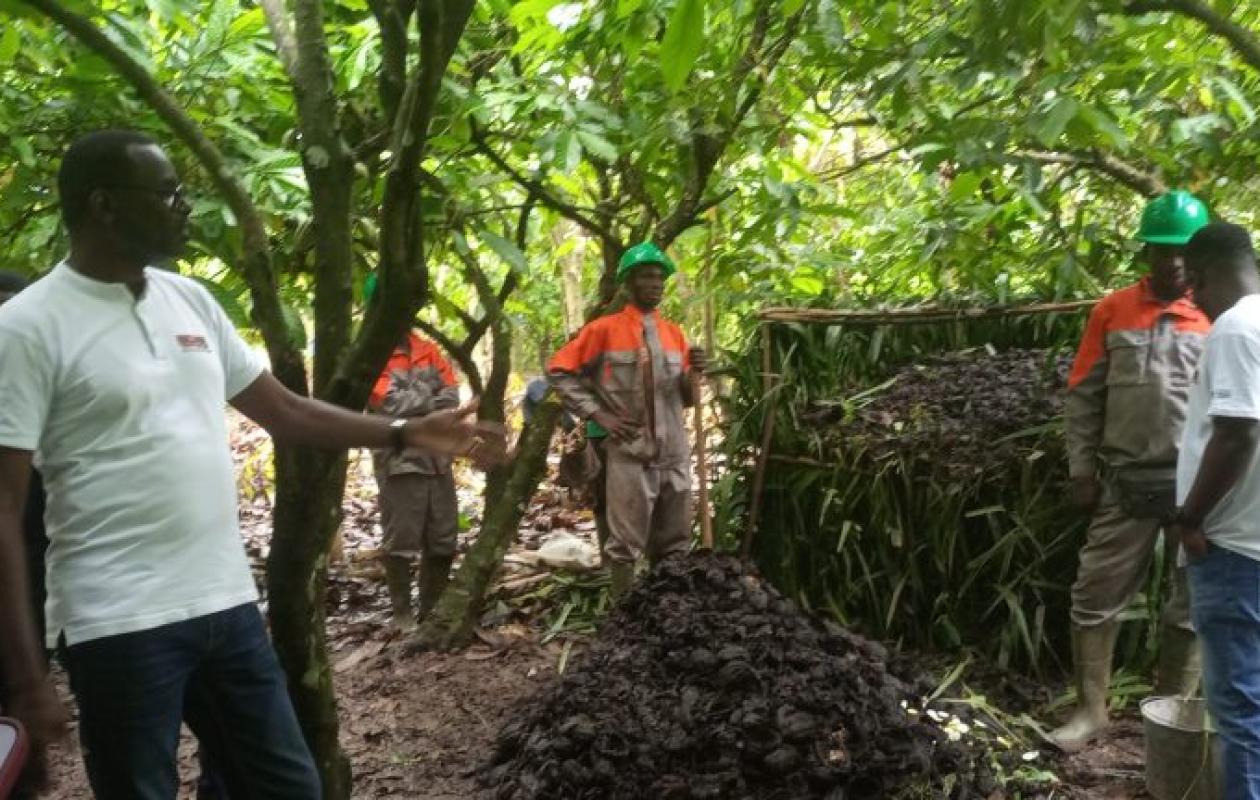
In Bringakro, a village seven kilometers from Djékanou, cocoa farming is undergoing a transformation. Under the cocoa trees, agricultural training sessions combine the stories of women entrepreneurs with expert analyses. Here, cocoa transcends its status as a mere cash crop to become the driving force of an ecosystem that blends modern agricultural techniques, women's empowerment, children's education, and environmental stewardship.
On June 26, 2026, a delegation of Nestlé executives (from Côte d'Ivoire, Ghana, Togo, Cameroon, Nigeria, and Senegal) and journalists from West and Central Africa visited the Dosso Vafoungbé plantation. A member of the SOCODD cooperative (Société coopérative du dialogue de Djékanou), this producer is at the heart of the Income Accelerator program.
Nathan Bello, head of the Nestlé Cocoa Plan for West Africa, recalled that this initiative, which began in 2009, aimed to address major crises in the sector: declining cocoa quality, orchard diseases, aging trees, precariousness of planters and child labor.
"A company that lives off chocolate has to look at what's happening upstream. We have learned from our experiences and gradually developed initiatives that now allow us to improve producers' incomes while ensuring the sustainability of our supply," he summarized.
The program now relies on four complementary levers to sustainably transform cocoa-growing communities.
The first pillar is based on technical training, plot management and compliance with social and environmental criteria.
The second pillar focuses on preserving biodiversity. In addition to distributing tree seedlings, the project deploys technical teams in the field to help farmers adapt their land to climate change.
To break the exclusive dependence on cocoa, the program relies on Community Support Associations (VSSAs). In Bringakro, seven groups are already active, offering women credit, literacy classes, management training, and awareness-raising on the use of domestic gas.
Access to education is the main safeguard against child labor. In Bringakro, Nestlé supports school infrastructure through the purchase of equipment, the strengthening of canteens, support for management committees (COGES) and the renovation of premises.
Amani Kouamé Georges, director of the Bringakro 1 public primary school, testifies to the effectiveness of this support, put in place with the support of the International Cocoa Initiative and the "My Reading Box" project:
"In both kindergarten and primary school, we received educational materials (...) we now have a library. Candidates for entry into sixth grade also receive meals and exam kits."
The academic results for the year illustrate this success:
These infrastructures are built in close collaboration with the Ministry of National Education, primarily targeting areas where the risks of child labor have historically been highest.
Launched in January 2022, the Household Income Acceleration Program now supports 45,000 cocoa-producing families in Côte d'Ivoire and Ghana. By combining agronomy, gender equality, diversification, and education, the Nestlé Cocoa Plan is based on the premise that the future and sustainability of chocolate depend first and foremost on the well-being and dignity of cocoa-producing families.
















Commentaires (0)
Participer à la Discussion
Règles de la communauté
💡 Astuce : Utilisez des emojis depuis votre téléphone ou le module emoji ci-dessous. Cliquez sur GIF pour ajouter un GIF animé. Collez un lien X/Twitter, TikTok ou Instagram pour l'afficher automatiquement.
Se connecter
Commentez avec votre profil, votre photo, et soyez averti des réponses.