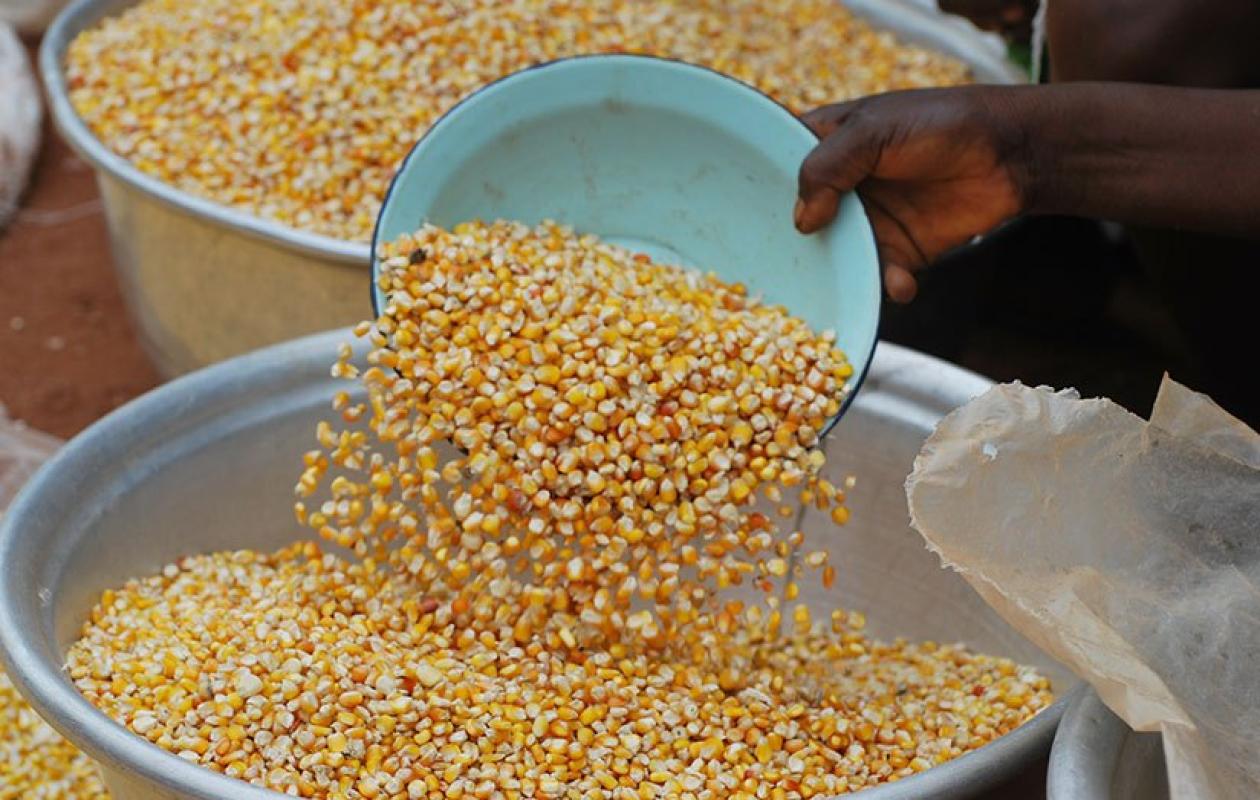
Climat : Pourquoi le maïs, le riz, le soja et le blé risquent de coûter de plus en plus cher
Corn, rice, soybeans, and wheat form the bedrock of the world's food supply, representing 60% of the calories consumed globally. Yet, the security of these staple foods is now threatened. In a recent report, the Food and Agriculture Organization of the United Nations (FAO) sounds the alarm: widespread rising temperatures are weakening crops, threatening to cause consumer prices to skyrocket.
The economic mechanism behind this threat is of a frightening mathematical simplicity: each 1°C increase in global temperature can reduce agricultural yields by 6% .
Concrete example: A farmer who usually produces 100 bags of corn will only harvest 94 if the thermometer rises by 1°C, and barely 88 if the temperature increases by 2°C.
Faced with food demand that remains unchanged, the law of the market applies immediately: the scarcity of products leads to an inevitable increase in prices on the shelves.
Extreme heat does not simply dry out the land; it attacks the entire agricultural ecosystem on several fronts:
In light of this situation, the FAO points out that the trajectory is not irreversible. Unlike earthquakes, climate anomalies can be anticipated thanks to advanced technologies and early warning systems.
If satellite data predicts an extreme heat wave in a region within two weeks, authorities can take preventative action: distributing drought-resistant seeds or recommending early harvests. This proactive approach not only saves production but also stabilizes supplies to local markets.
Until now, the overall response has often consisted of treating the wounds after the crisis, by distributing emergency aid to the victims. This is the principle of adaptation.
However, as global warming approaches the critical 1.5°C threshold set by the Paris Agreement, adaptation will soon no longer be enough. The heat will simply become too intense for traditional methods.
To guarantee the future of our food security, the real key lies in mitigation . Nations must tackle the root of the problem by massively reducing greenhouse gas emissions. This is the only way to sustainably stabilize global temperatures and protect the food supply for future generations.





















Commentaires (0)
Participer à la Discussion
Règles de la communauté :
💡 Astuce : Utilisez des emojis depuis votre téléphone ou le module emoji ci-dessous. Cliquez sur GIF pour ajouter un GIF animé. Collez un lien X/Twitter, TikTok ou Instagram pour l'afficher automatiquement.