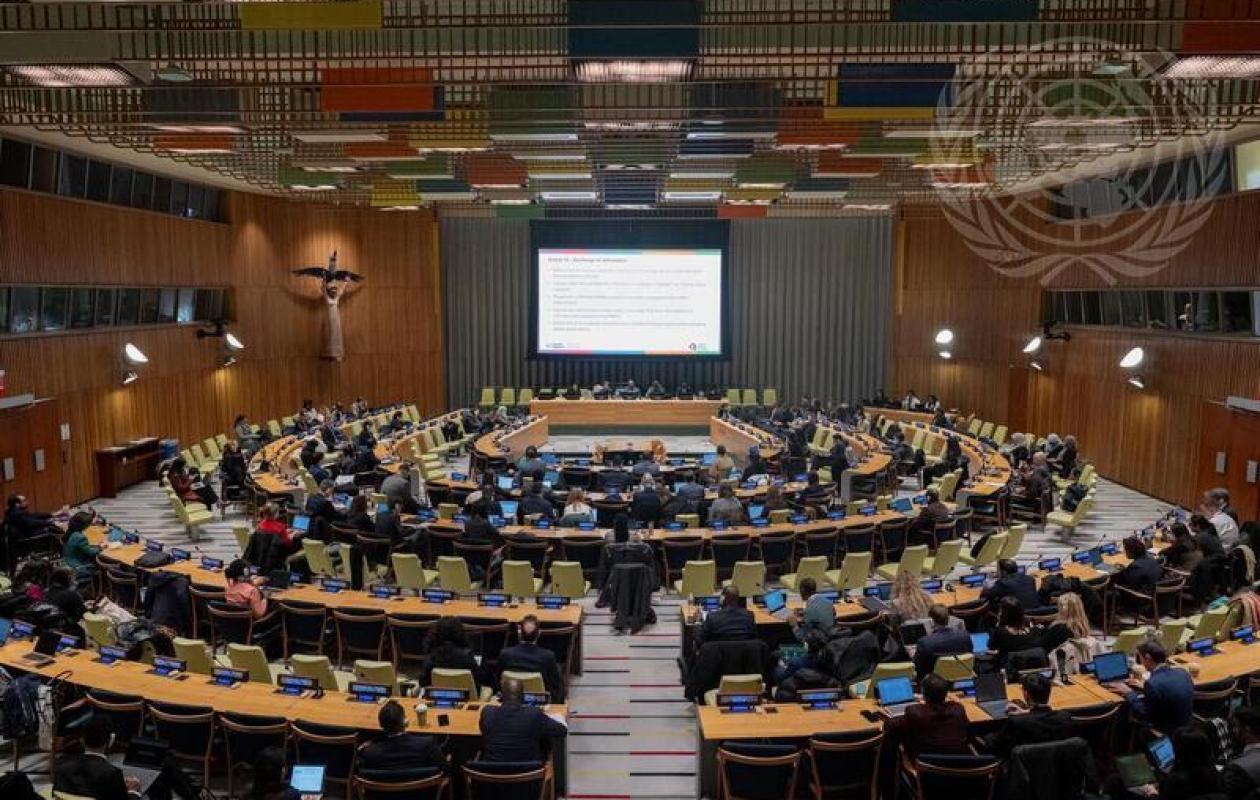
L’ONU érige le "Soin" en nouvelle infrastructure du développement mondial
The closing of the 64th session of the United Nations Commission on Social Development marks a historic turning point. From February 4 to 10, the debates moved beyond abstraction to redefine "care" (the provision of care and support) not as a budgetary burden, but as the central pillar of a new global economy.
The first major shift was conceptual. Under the impetus of experts like José Antonio Ocampo and the Chinese delegation, the Commission acknowledged that poverty is not simply a lack of money.
The events of February 5th highlighted a structural crisis: the exhaustion of traditional family solidarity.
"The global economy relies on invisible labor, subsidized by women's unpaid time."
In Jamaica and Latin America, the aging population is overwhelming informal networks. The Commission warns that without massive government intervention to professionalize and fund care services, social inequalities will skyrocket, penalizing the poorest households who cannot delegate these tasks to the private sector.
One of the highlights of the session was the intervention by Violet Shivut (Kenya). She reminded the audience that in the Global South, community networks compensate for the shortcomings of official health systems.
On February 10, the adoption of the final resolutions revealed the ideological fractures of current multilateralism:
| Block | Position |
| Sovereignists (Iran, Russia, Holy See) | Biological view of gender and primacy of national/religious values. |
| Progressives (Switzerland, Canada, Mexico, UK) | Emphasis on intersectionality (cross-discrimination related to age, ethnicity, disability). |
Despite these frictions, the Doha commitments are now anchored in the official UN framework, proving that social development has become a major area of geopolitical influence.
Nigeria distinguished itself by proposing a "pragmatic roadmap" for Africa, linking human rights to total intersectoral coordination (health, law, economy).
On to the 65th session:
The torch now passes to Portugal (Stefano Guerra). The next theme will be dedicated to intergenerational approaches , with a reaffirmed urgency: global economic resilience will depend on our ability to leave no country behind.







Commentaires (0)
Participer à la Discussion
Règles de la communauté :
💡 Astuce : Utilisez des emojis depuis votre téléphone ou le module emoji ci-dessous. Cliquez sur GIF pour ajouter un GIF animé. Collez un lien X/Twitter, TikTok ou Instagram pour l'afficher automatiquement.