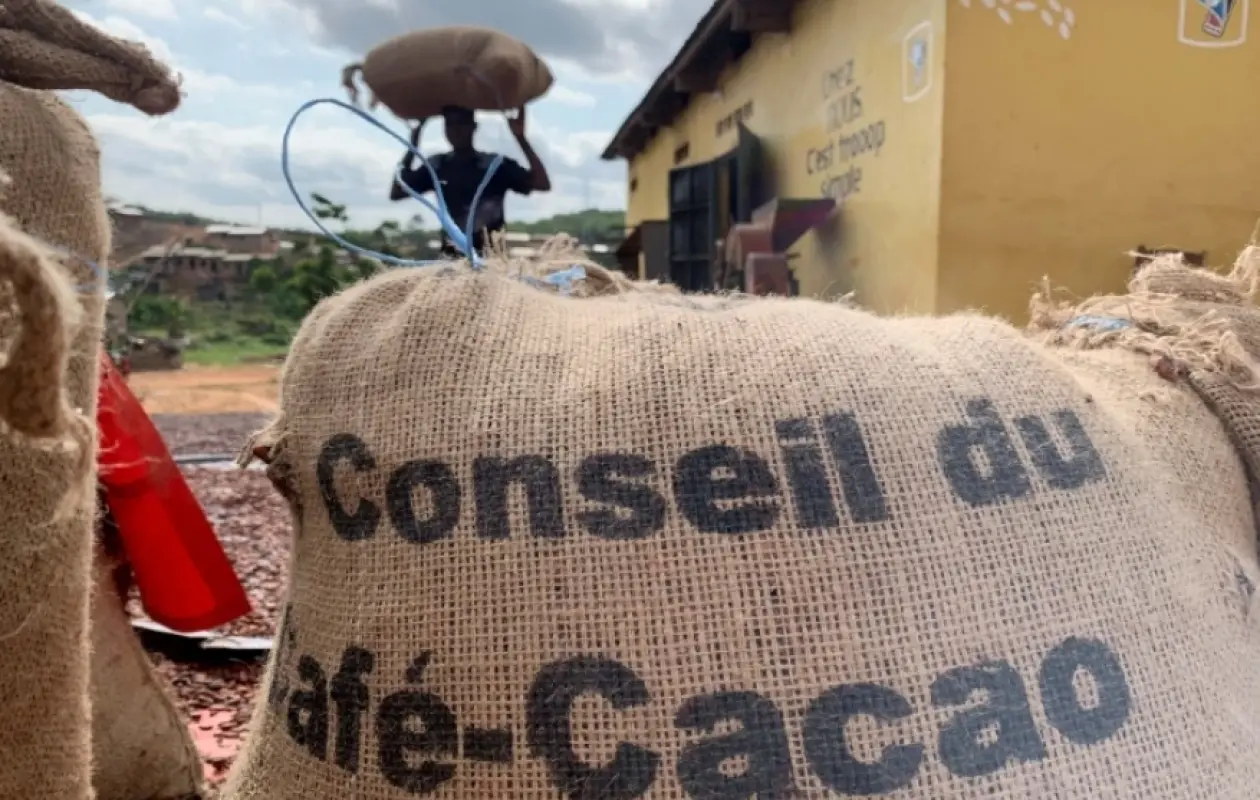
Cacao ivoirien : Le mystère du fonds de réserve face à une crise sans précédent
The Ivorian economy is sputtering. As global cocoa prices plummet, the stabilization system in Côte d'Ivoire—the world's leading producer—is under severe strain. At the heart of the debate is the management of the reserve fund , intended to protect farmers, but whose lack of transparency is now causing serious concern.
The current situation is mathematically untenable. In New York, the price of cocoa has fallen to 2,253 FCFA/kg , while the guaranteed price for Ivorian producers is set at 2,800 FCFA and the CIF price for exporters at 4,100 FCFA .
To maintain these tariffs and compensate exporters for their losses, the government would need to inject massive aid. According to Dr. Ahoua Don Mello, expert and vice-president of BRICS+:
The smoothing mechanism, intended to cushion these shocks, appears to have broken down. Dr. Ahoua Don Mello points to a governance failure. During boom times, the state collects the difference between the international selling price and the CIF price.
| Indicator | Expert's Appraisal |
| Profit margin per kilo (in good years) | 1,000 to 3,000 FCFA |
| Theoretical annual payments | 2,000 to 6,000 billion FCFA |
| Current status | No explicit trace in the state budget |
According to the expert, if these sums had been managed transparently within a sovereign wealth fund , they would not only have stabilized the sector, but also financed the necessary industrialization (local processing) to get out of dependence on raw beans, whose preservation is limited to 6 months.
Without swift and transparent intervention regarding the reserves, the specter of a social crisis looms. The stakeholders are caught in a bind:
To address the most urgent needs, the authorities have begun directly purchasing stocks (over 700,000 tons) to inject liquidity into the cooperatives. While the government assures that the price of 2,800 FCFA will be maintained for these transactions, uncertainty remains for the April harvest, especially after the price reductions in neighboring Ghana.
The observation is bitter: If the reserves accumulated in recent years really exist, why must the State resort to exceptional rescue measures rather than activating its natural stabilization fund?



















Commentaires (0)
Participer à la Discussion
Règles de la communauté
💡 Astuce : Utilisez des emojis depuis votre téléphone ou le module emoji ci-dessous. Cliquez sur GIF pour ajouter un GIF animé. Collez un lien X/Twitter, TikTok ou Instagram pour l'afficher automatiquement.
Se connecter
Commentez avec votre profil, votre photo, et soyez averti des réponses.