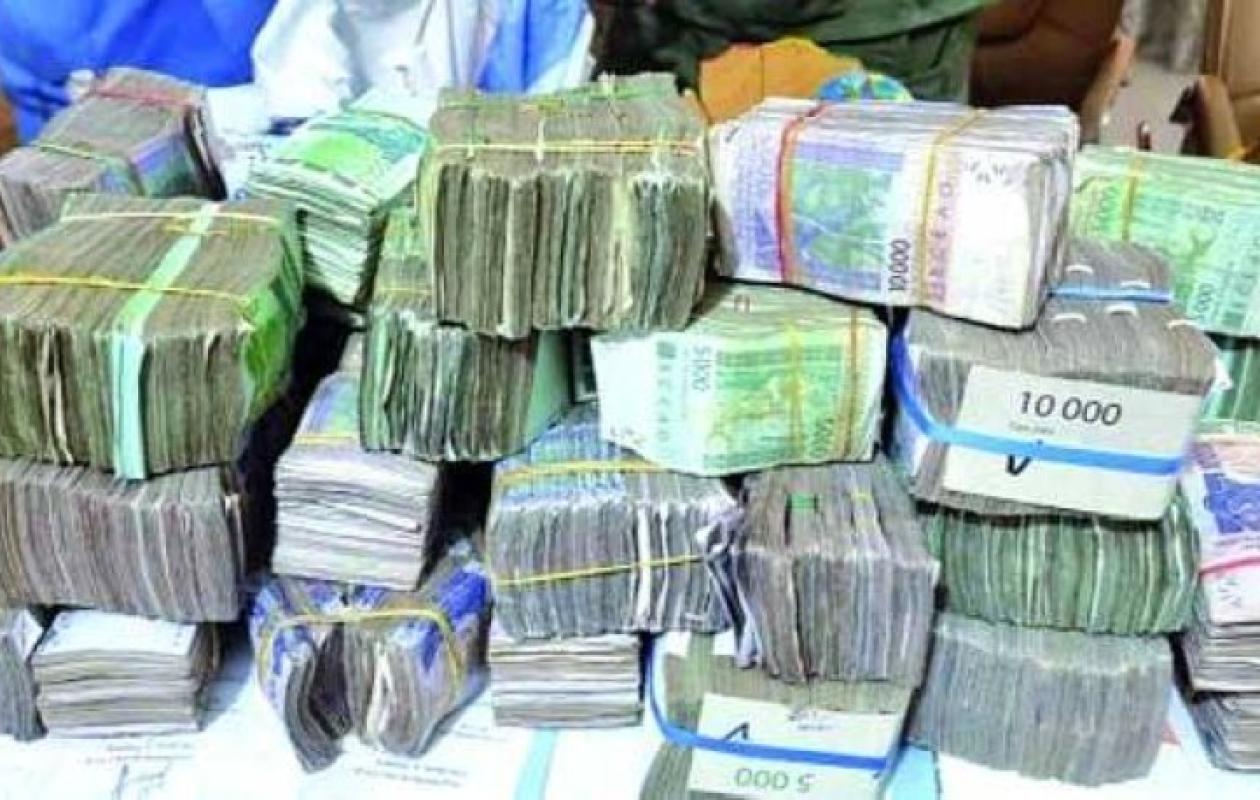
Criminalité financière : La Côte d’Ivoire intensifie sa lutte contre le blanchiment et le terrorisme
Money laundering, fueled by false invoices, fictitious transactions, and simulated services, directly threatens the financial stability and development of Côte d'Ivoire. Faced with this scourge, which allows illicit funds to be legalized through companies with high cash handling, Abidjan—like other WAEMU countries—is taking the offensive.
Recent events perfectly illustrate this rigorous shift. Two months after it began, the case involving the Ivorian influencer Apoutchou National, prosecuted for money laundering, remains at the center of public attention.
On Tuesday, April 21, 2026, the court granted a temporary lifting of his travel ban to allow him to renew his residency permit in France. However, the legal pressure remains at its highest level.
Beyond the media attention, the institutional response is intended to be systematic. Since its launch in January 2020, the PPEF has a particularly busy activity record:
| PPEF Activity Indicator | Data |
| Procedures handled | More than 1,964 |
| Procedures closed | 1,174 |
| Cases decided | 819 |
| Value of seizures (accounts, buildings, vehicles) | + 10 billion CFA francs |
"These results reflect the effectiveness and sustained pace of the investigations."
— Jean Sansan Kambilé , Minister of Justice.
To combat financial crime, Ivory Coast now relies on a three-pronged approach of specialized institutions:
The Ivorian response is part of a community framework harmonized by the BCEAO and GIABA , modeled on the FATF international standards. This framework imposes strict obligations for due diligence and suspicious transaction reporting on both the financial and non-financial sectors.
According to the UEMOA Commission's Representation Office in Côte d'Ivoire, the country made significant progress between 2021 and 2025 in implementing directives against money laundering, terrorist financing, and the proliferation of weapons of mass destruction. However, further efforts are needed to achieve full and optimal implementation of these rules.
Money laundering distorts economic indicators, skews growth forecasts, and directly finances terrorism. The impact at the continental and national levels is alarming:
These illicit funds infiltrate mainly through banks, insurance companies, microfinance, gambling, the stock market and especially the real estate sector , which remains one of the preferred vectors of money laundering in the region.
Faced with these interconnected threats, strengthening governance and collective mobilization are now vital priorities to preserve the country's economic future.














Commentaires (0)
Participer à la Discussion
Règles de la communauté :
💡 Astuce : Utilisez des emojis depuis votre téléphone ou le module emoji ci-dessous. Cliquez sur GIF pour ajouter un GIF animé. Collez un lien X/Twitter, TikTok ou Instagram pour l'afficher automatiquement.