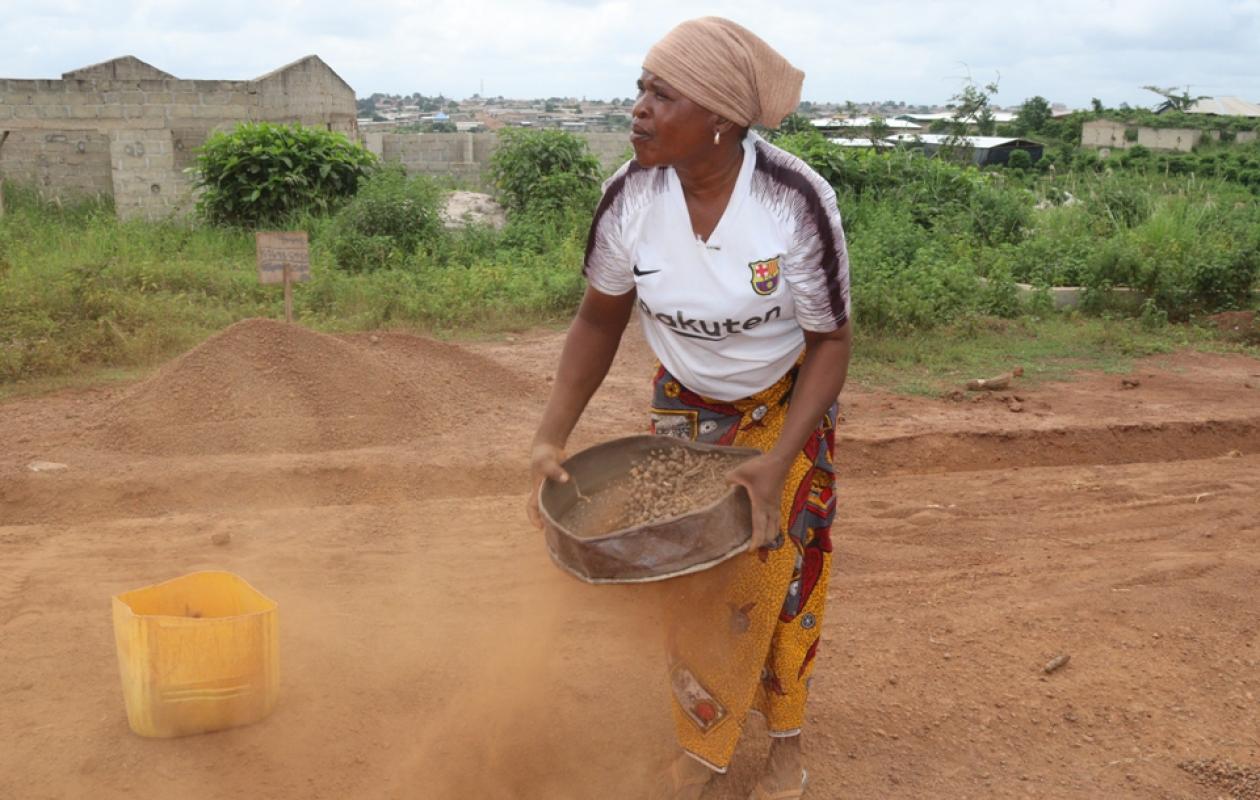
Gagnoa : Le gravier rouge, l'or brut des femmes de l'ombre
In the rapidly expanding neighborhoods of Gagnoa, survival and the quest for financial independence sometimes go hand in hand with the rhythm of the sieve. Armed with a simple used soup tureen and a wire mesh screen, several women travel the dusty tracks to collect red gravel, a material they then resell to surrounding construction sites.
To understand this reality, one must go to the new "University" district. Three kilometers from the former UNOCI intersection, along an unpaved road lined with buildings, a figure catches the eye. A woman, her face wrapped in a scarf and bent over the ground, meticulously scrapes the pavement with a flattened tureen. Her goal: to collect gravel mixed with sand to create a marketable stockpile.
This woman is Koné Fanta. A mother of three and in her forties, she has been doing this arduous job for almost ten years. Without gloves and wearing simple sandals, she sweeps the earth, despite the coming and going of the communal taxis, to form small piles.
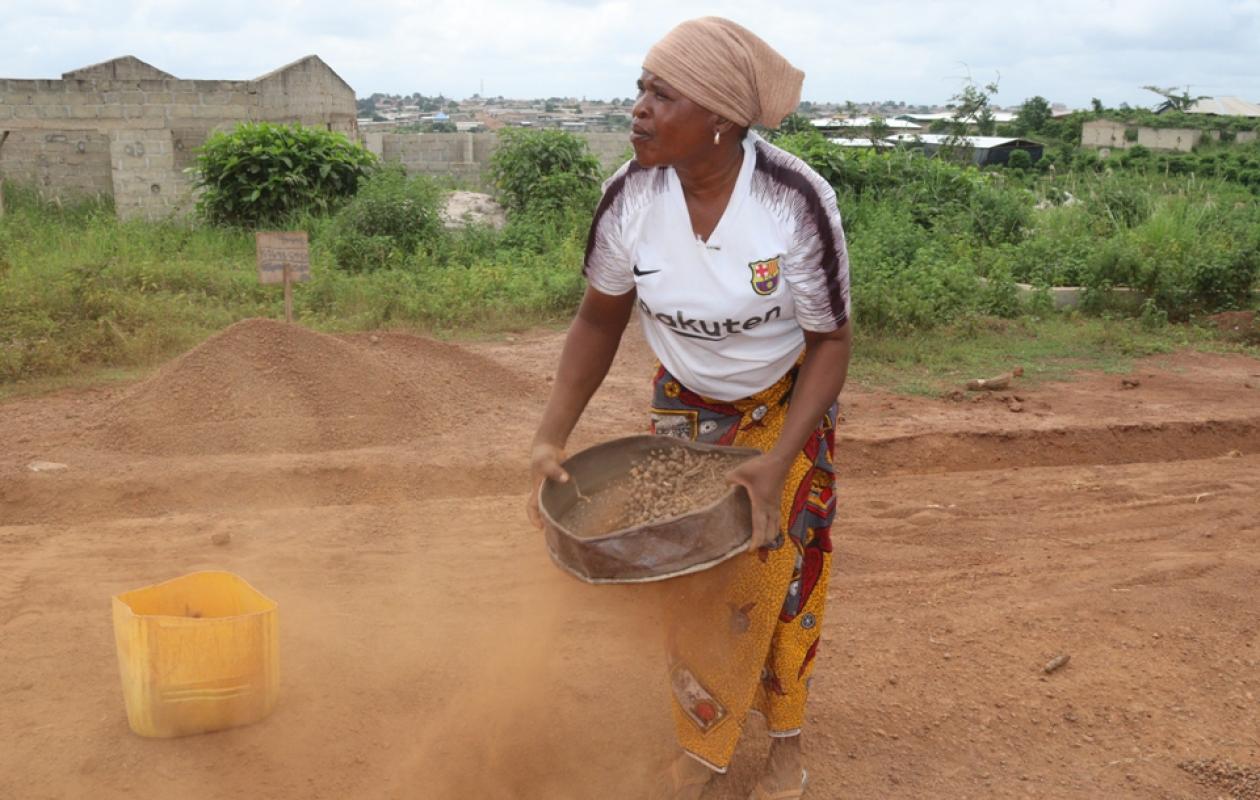
To separate the stone from the dust, Fanta uses a circular sieve 40 centimeters in diameter. Shaken vigorously, the tool raises a thick cloud of dust before the surprised eyes of passersby, finally revealing the precious red shards.
Fanta lives modestly in the Sokoura district with her children and her partner, a market gardener by profession.
"At first, I sold the vegetables from our plot, but between harvests, the lean period had become too difficult," she confides.
It was in 2015, near the "Garage Koffi" area, that she discovered this alternative activity. Since then, she has been scouring the roadsides of unfinished construction sites. The task is lengthy: it takes her between five days and a week of intensive sifting to collect enough to fill a few 20-liter jerrycans, which she stores by the roadside under a small sales sign. This logistics are often disrupted by the rainy season.
This livelihood is not without its tensions. On the ground, coexistence is sometimes difficult:
Added to this is the risk of nighttime theft, a scourge that has fortunately decreased with the densification of the neighborhood.
Along the three kilometers of this track, about ten women work in isolation, each on her own section. Men also engage in this activity, but on an industrial and highly structured scale, handling several tons.
For Fanta and her peers, the winnings remain modest:
Beyond the difficulty of the task, the technical viability of this material is questionable. According to Coulibaly Saïdou, president of the Gagnoa Departmental Chamber of Trades, this recycled gravel is unsuitable for construction:
"Red gravel is unsuitable for construction. Its small size presents a real risk of cracking in buildings."
Although threatened in the long term by urban development which is paving over the tracks and by competition from mechanized male farms, this informal activity remains, for Fanta and her colleagues, an essential lifeline in the face of the precariousness of daily life.


















Commentaires (0)
Participer à la Discussion
Règles de la communauté
💡 Astuce : Utilisez des emojis depuis votre téléphone ou le module emoji ci-dessous. Cliquez sur GIF pour ajouter un GIF animé. Collez un lien X/Twitter, TikTok ou Instagram pour l'afficher automatiquement.
Se connecter
Commentez avec votre profil, votre photo, et soyez averti des réponses.